







More businesses now use digital assets in daily operations. Payments, settlements, internal transfers and treasury flows increasingly combine crypto and fiat. As volumes grow, companies face a practical question: how to convert digital assets into fiat safely and without losing money on timing or fees.
Real-time conversion has become an important tool for businesses that do not want to hold crypto longer than necessary. Instead of waiting for approvals or fixed settlement windows, companies exchange assets at the moment liquidity is needed. This approach changes how finance teams think about speed, risk and control.
On-demand conversion
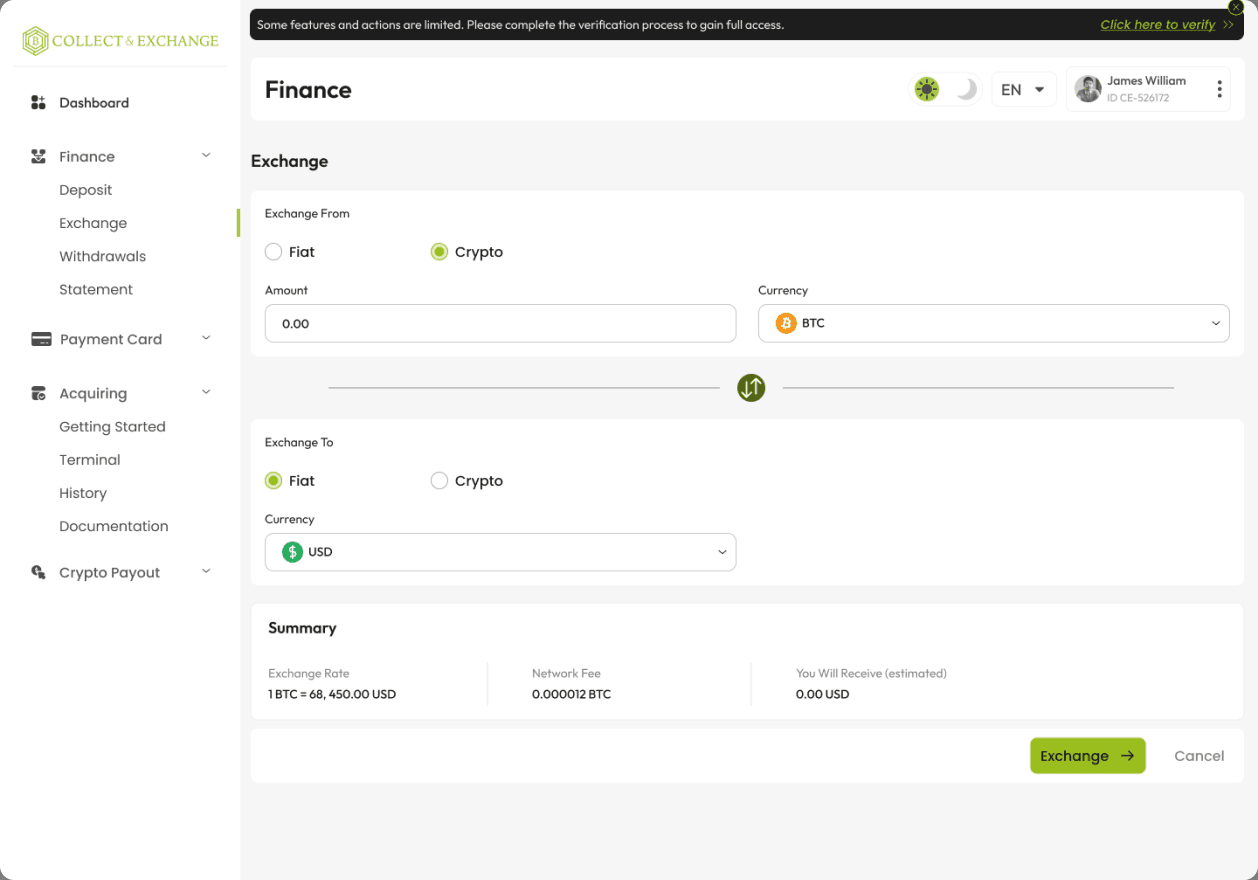
On-demand conversion allows businesses to exchange digital assets into fiat exactly when funds are required. It is especially useful for companies with strict payment schedules, such as payroll, supplier settlements or tax obligations. Instead of planning conversions days in advance, finance teams can act immediately.
Predictability is one of the main advantages. When conversion happens instantly, companies avoid delays caused by banking cutoffs, weekends or holidays. Automated digital assets cash-out processes remove manual steps and reduce the risk of human error. Funds move faster and operations become easier to manage.
Many businesses receive payments in crypto while operating mostly in fiat. With on-demand conversion, incoming funds can be exchanged immediately and used for daily expenses. This strengthens digital assets management and prevents working capital from being locked in volatile instruments.
Price accuracy plays an important role as well. Real-time systems rely on live price feeds that reflect current market conditions. This lowers the risk of converting at outdated rates and helps avoid unexpected losses. Compared to delayed or manual conversions, execution quality can be noticeably better during active market hours.
Speed is especially important for companies operating across borders. When conversion is delayed, payment chains slow down and relationships with partners may suffer. On-demand conversion supports faster settlements and allows crypto inflows to align with fiat outflows on the same day.
Automation adds another layer of efficiency. When conversion rules are predefined, businesses can trigger automated digital assets cash-out without constant supervision. This reduces operational load and allows finance teams to focus on strategic tasks rather than routine execution.
Real-time digital assets conversion
Real-time digital assets conversion offers clear benefits, but it also introduces risks that businesses must understand. The most obvious one is market volatility. Crypto prices can change quickly, and instant execution exposes companies to short-term price movements.
Execution risk is another factor. Even fast systems can face slippage when liquidity is low. In such conditions, large transactions may move the market and affect final settlement amounts.
This is especially relevant when converting less liquid assets. Businesses need to account for this risk when planning transaction size and timing.
Risk management becomes essential. Many companies use basic hedging strategies to limit exposure. Some rely on stable coins before conversion. Others split transactions into smaller parts to reduce price impact. These approaches help balance speed with cost control.
Compliance and internal controls are equally important. Real-time systems must integrate with accounting, reporting and approval workflows. Without proper oversight, instant conversions can create gaps in audit trails or reconciliation. Automation should support control, not replace it.
Infrastructure reliability is another key consideration. Real-time conversion depends on stable platforms, strong connectivity and accurate data sources. If price feeds are delayed or incorrect, execution quality suffers. Provider selection plays a major role in how reliable and predictable the entire process will be.
Despite these challenges, many businesses find that the benefits outweigh the risks. Faster access to fiat improves cash flow planning and reduces uncertainty. Finance teams gain flexibility and can respond quickly to changing market conditions.The key is balance. Real-time digital assets conversion should not be used for every transaction. It works best as part of a broader treasury strategy that defines when speed matters most and when holding assets is acceptable.
As digital finance continues to evolve, real-time conversion is becoming a standard expectation rather than a special feature. Businesses that understand both the advantages and the risks are better positioned to use digital assets efficiently without turning operational gains into financial exposure.Enterprises achieve the best results not by chasing speed alone, but by building systems that combine automation, control and thoughtful risk management.